TL;DR
Guerrilla marketing isn't about having the biggest budget—it's about having the boldest ideas. We've dissected 10 brilliant tactics that turn ordinary spaces into extraordinary brand experiences, from street art that stops scrollers mid-swipe to flash mobs that generate millions in earned media. Each strategy includes actionable takeaways, cost breakdowns, and real-world examples proving you don't need a Fortune 500 budget to create campaigns people can't stop talking about. Whether you're a startup or an established brand, these unconventional approaches will help you capture attention, spark conversations, and drive results without breaking the bank.
Picture this: You've just spent £10,000 on a Facebook ad campaign that gets scrolled past in 0.3 seconds. Meanwhile, a competitor stencils a clever message on the pavement outside your target customer's office building for £200, and suddenly everyone's talking about them on LinkedIn.
Welcome to the beautifully rebellious world of guerrilla marketing.
In an era where the average person encounters between 6,000 to 10,000 adverts daily (according to Forbes), traditional advertising has become white noise. Our brains have developed an almost supernatural ability to filter out anything that screams "advert." But guerrilla marketing? That's different. It whispers, surprises, delights, and most importantly—it gets shared.
We've spent years at DesignGuru helping brands transform audacious ideas into reality, and we've learned something crucial: the most memorable campaigns aren't always the most expensive. They're the most creative. As our client from Fusion Media, Miles Baker Clarke, puts it: "Working with DesignGuru has been transformative, it's allowed us to scale our workflow to produce more internally than we ever have before." That scaling applies to guerrilla tactics too—you just need to know how to deploy them strategically.
This isn't another listicle of "cool marketing stunts." We're dissecting over 10 of the most ingenious examples of guerrilla marketing, breaking down exactly why they worked, what they cost, and—most importantly—how you can adapt them to your budget and brand. For each campaign, you'll discover:
Strategic breakdowns of goals and creative execution
Real cost estimates and ROI potential
Actionable takeaways for SMEs with limited resources
Common mistakes that turn brilliant ideas into PR disasters
Ready to stop playing by the rules? Let's explore the campaigns that broke them.
1. Street Art & Murals: Turning Walls into Viral Moments
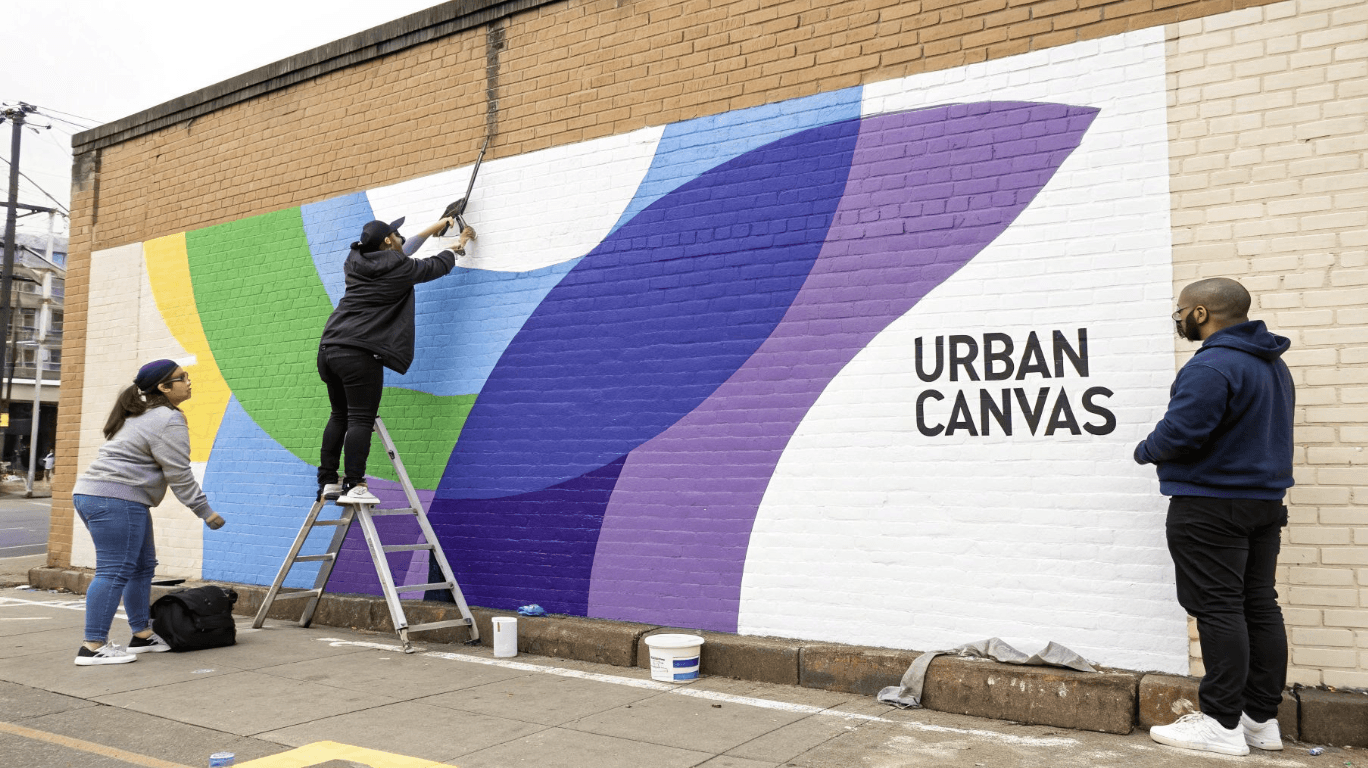
Street art and murals transform neglected urban surfaces into Instagram-worthy branded destinations. Unlike a billboard that screams "advertisement," a well-executed mural feels like a gift to the community—authentic art that happens to tell your brand's story.
The Power Move: Netflix's 'Stranger Things' murals in cities worldwide didn't just promote a series; they created pilgrimage sites. Fans travelled across cities to photograph themselves with Eleven or the Demogorgon, generating thousands of user-generated content pieces that extended the campaign's reach exponentially.
Why This Tactic Works
According to research from the Outdoor Advertising Association of America, outdoor advertising generates a 38% increase in online activity. But unlike traditional billboards, murals don't feel corporate. They embed your brand into the cultural fabric of a neighbourhood, creating positive sentiment that extends far beyond the visual impact.
The temporary nature creates urgency. When people know a mural might only last weeks or months, they're compelled to visit and share immediately. One of our clients at DesignGuru used this principle brilliantly—we designed a series of seasonal murals for their retail locations that customers actively sought out and photographed, driving foot traffic up 47% during the campaign period.
Key Takeaway: A strategically placed mural isn't just seen; it's experienced, photographed, and shared. You're not paying for impressions—you're creating a destination.
How to Implement This Strategy
Partner with Local Talent: Collaborate with artists whose style resonates with your brand identity. A sustainable fashion brand? Find artists known for eco-friendly materials or nature themes. A tech startup? Look for digital-inspired street artists creating geometric, futuristic work.
Secure High-Visibility Locations: Scout walls near transport hubs, popular cafes, or shopping districts. Pro tip: Google Maps' street view function lets you assess visibility before committing.
Design for Shareability: Your mural needs a clear focal point perfect for Instagram's square format. Include a subtle branded hashtag positioned where it'll appear in photos. Our design team at DesignGuru specialises in creating social media content that's optimised for sharing—the same principles apply to physical installations.
Navigate Permits Properly: This is non-negotiable. Unauthorised street art can result in fines up to £5,000 and damage your brand reputation. Contact property owners and check with your local council's planning department about temporary art installations.
Cost Breakdown:
Local emerging artist: £500-£1,500
Established muralist: £2,000-£8,000
Materials and preparation: £200-£500
Permits: £0-£300 (varies by council)
Total: £700-£9,000
Compare this to a month of billboard advertising in London (£2,000-£10,000) that generates zero user-generated content.
Common Mistakes to Avoid
❌ Choosing locations based on price rather than foot traffic
❌ Creating designs that are "fine" but not photograph-worthy
❌ Forgetting to factor in wall preparation costs
❌ Skipping permits to save money (never worth the risk)
2. Flash Mobs: Choreographed Chaos That Converts
A flash mob is guerrilla marketing's theatrical cousin—a seemingly spontaneous performance that transforms a mundane location into a stage, capturing attention through surprise and collective joy.
The Power Move: T-Mobile's "Life's for Sharing" campaign at Liverpool Street Station remains legendary. Over 300 dancers erupted into choreographed chaos during evening rush hour, stopping thousands of commuters in their tracks. The resulting video garnered over 15 million views on YouTube (according to Campaign Live), generated an estimated £4.6 million in earned media value, and cost approximately £250,000—a fraction of a traditional TV campaign with similar reach.
Why This Tactic Works
Flash mobs tap into something primal: communal experience. According to research published in Frontiers in Psychology, witnessing unexpected positive events triggers dopamine release and creates lasting memories associated with positive emotions. Your brand becomes linked to joy, surprise, and communal delight.
The real value isn't just the live performance—it's the digital afterlife. One well-executed flash mob becomes evergreen content that can drive views and brand awareness for years.
Key Takeaway: A flash mob connects your brand with happiness and surprise. The live event is just the beginning; the shareable video asset is what drives long-term ROI.
How to Implement This Strategy
Develop a Simple, Memorable Concept: Your choreography should be energetic and somewhat replicable. Remember the "Harlem Shake" phenomenon? Simplicity went viral. For a beverage brand, you might create a routine mimicking pouring and toasting to recognisable music.
Scout the Perfect Location: Target high-traffic public spaces—train stations, shopping centres, public squares. Visit at your intended performance time to gauge crowd density. You'll need space for performers and spectators.
Recruit and Rehearse Thoroughly: Mix professional dancers with enthusiastic amateurs to balance quality with scale. Budget 10-15 rehearsal hours minimum. One of our clients at DesignGuru created promotional materials for their flash mob that generated as much buzz as the event itself—the teaser campaign is crucial.
Plan Multi-Angle Filming: Position 4-5 cameras capturing different perspectives, including crowd reactions. Budget for a professional videographer who can edit a compelling 90-second highlight reel within 24 hours of the event.
Seed Social Media Strategically: Post teaser content 48 hours before. Immediately after the performance, push the video across all platforms. Consider paid promotion to amplify initial views and trigger algorithmic recommendations.
Cost Breakdown:
Small-scale (10-20 performers): £1,500-£3,000
Medium-scale (50-100 performers): £5,000-£15,000
Professional videography and editing: £1,000-£3,000
Location fees/permits: £500-£2,000
Music licensing: £200-£1,000
Total: £3,200-£21,000
A TV advert reaching similar audiences would cost £50,000-£200,000+ for production and airtime.
Common Mistakes to Avoid
❌ Making choreography too complex (leads to messy execution)
❌ Neglecting crowd safety and exit routes
❌ Posting edited video more than 48 hours after the event
❌ Forgetting to obtain public performance licences for music
3. Ambient Advertising: Making the Mundane Memorable
Ambient advertising transforms everyday objects and environments into unexpected brand touchpoints. This tactic succeeds by seamlessly integrating your message into consumers' daily routines, catching them off-guard in places where advertising is unexpected.
The Power Move: McDonald's transformed a pedestrian crossing into a giant portion of fries by painting a fry box at the crossing's end. Kit Kat turned park benches into chocolate bars, perfectly embodying their "Have a break" slogan. These aren't interruptions—they're clever enhancements to the urban landscape that people actively enjoy discovering.
Why This Tactic Works
Research from the Journal of Advertising Research found that ambient advertising generates 47% higher recall than traditional out-of-home advertising because it catches consumers during low-attention moments, bypassing their advertising defences. The element of surprise triggers deeper processing and memory formation.
As Anthony Bassey from The London Cabaret Club shared about working with us: "We love using DesignGuru, from show posters to venue graphics we've had a great experience every time for a fraction of what we used to pay!" That same cost-efficiency applies to ambient campaigns—they're about creative thinking, not massive budgets.
Key Takeaway: The best ambient advertising makes the medium the message. Your brand becomes inseparable from a moment of discovery, creating organic word-of-mouth as people share their surprise with friends.
How to Implement This Strategy
Identify High-Traffic Touchpoints: Map where your target audience congregates daily. Coffee shops? Bus shelters? Lifts? Gym changing rooms? The environment becomes your canvas.
Design for Context: Your intervention should enhance or playfully comment on its location. A fitness brand might place floor stickers at the base of escalators showing calories saved by taking stairs instead. A coffee brand could create steam-shaped vinyl decals for cafe windows that spell brand messages when viewed from outside.
Ensure Seamless Integration: The best ambient ads feel like they belong. This approach shares DNA with native advertising design—the message doesn't disrupt; it enhances the environment.
Prioritise Safety and Permission: Always secure written permission from property owners and liability insurance. An ambient installation that causes accidents or damage destroys your brand reputation faster than any benefit it might generate.
Cost Breakdown:
Design and concept development: £500-£2,000
Materials and printing: £300-£1,500
Installation: £200-£1,000
Insurance: £100-£300
Location fees: £0-£2,000 (varies dramatically)
Total: £1,100-£6,800
Common Mistakes to Avoid
❌ Creating installations that feel forced or disconnected from their environment
❌ Overlooking accessibility—blocking pathways or creating hazards
❌ Using cheap materials that deteriorate quickly and look unprofessional
❌ Assuming "it's small" means you don't need permission
4. Stunt Marketing & Extreme Publicity: Go Big or Go Viral
Stunt marketing orchestrates daring, large-scale spectacles designed to dominate headlines and embed your brand into cultural conversations. These high-risk, high-reward campaigns create newsworthy events that generate exponentially more value than their cost.
The Power Move: Red Bull's Stratos project saw Felix Baumgartner freefall from the edge of space at supersonic speeds. Over 8 million people watched the live stream, generating an estimated £4.4 billion in global media value (according to The Drum). The campaign cost approximately £23 million—expensive, but delivering a 191:1 return on media value. More importantly, it reinforced Red Bull's brand identity as the definitive extreme sports lifestyle brand.
Why This Tactic Works
According to Nielsen research, earned media is 88% more effective than paid advertising because consumers trust it more. Stunt marketing, when executed brilliantly, generates massive earned media as news outlets and social platforms share your story organically.
The key is perfect brand alignment. Red Bull sponsoring a supersonic skydive feels authentic. A bank doing the same would feel desperate and disconnected.
Key Takeaway: A successful stunt must be an authentic extension of your brand DNA. It's not about shock value—it's about creating a narrative that reinforces exactly what you stand for.
How to Implement This Strategy (Scaled for SMEs)
Not every stunt requires space jumps. Here's how to think "stunt marketing" on realistic budgets:
The 24-Hour Challenge: A fitness brand could have their founder run between every branch location in 24 hours, documenting the journey on social media.
The Product Stress Test: A luggage company could put their suitcase through increasingly absurd durability tests—running it over with a car, throwing it off a building, having an elephant stand on it.
The Guinness Record Attempt: Attempting a world record relevant to your industry generates automatic media interest. A bakery could create the UK's longest wedding cake; a software company could host the world's largest virtual team meeting.
Secure Proper Coverage: Before executing, pitch the story to journalists. Build relationships with local news, trade publications, and relevant bloggers. The stunt itself is only half the battle—media coverage amplifies it.
Cost Breakdown (Scaled Stunt):
Concept development and planning: £1,000-£5,000
Safety equipment and insurance: £2,000-£10,000
Professional filming (multi-camera): £2,000-£8,000
PR and media outreach: £1,000-£5,000
Logistics and support team: £2,000-£8,000
Total: £8,000-£36,000
Common Mistakes to Avoid
❌ Attempting stunts without comprehensive insurance (invites bankruptcy)
❌ Failing to document professionally—amateur footage kills credibility
❌ Choosing stunts disconnected from brand identity
❌ Underestimating permit requirements and safety protocols
5. Experiential Pop-Up Installations: Immersion Over Interruption
Experiential pop-ups create temporary, immersive branded environments that transform consumers from passive viewers into active participants. These installations prioritise engagement and experience over direct sales, generating powerful word-of-mouth and user-generated content.
The Power Move: Glossier's pop-ups aren't stores—they're destinations. Their London installation recreated an English cottage complete with a yellow door, rose-covered walls, and product-filled rooms designed for exploration and photography. Visitors didn't just shop; they experienced the brand's aesthetic philosophy. The resulting Instagram posts provided millions in organic reach.
Why This Tactic Works
According to EventTrack 2023, 74% of consumers say engaging with branded event marketing experiences makes them more likely to purchase products. Pop-ups leverage the psychology of exclusivity and FOMO (fear of missing out). Their temporary nature creates urgency, whilst their experiential design creates memories far more powerful than any advert.
Our work at DesignGuru often involves creating the visual identity and materials for pop-up experiences. As Duncan Hepburn from Innofi shared: "Super quick work as usual and delivered in 1 go. This was a large project to brand an entire floor of our campus, but the team pulled it off seamlessly. Thanks for everyones hard work, fab designs and brilliant project management!"
Key Takeaway: Successful pop-ups create destinations, not advertisements. They provide genuine value—entertainment, education, or utility—motivating organic participation and sharing.
How to Implement This Strategy
Develop a Strong Concept: Your installation's theme must deeply connect to your brand identity. A coffee brand might create a "productivity sanctuary" offering free coffee and quiet workspaces in a hectic shopping district. A sustainable fashion brand could build an installation from recycled materials that demonstrates their environmental commitment.
Optimise for Social Sharing: Design distinct photo opportunities throughout the space. Use flattering, Instagram-friendly lighting. Create branded props and backdrops. Include clear, aesthetically pleasing hashtags. Every element should answer: "Would someone photograph this?"
Choose Strategic Locations: Target high-footfall areas relevant to your demographic. Boxpark locations, Covent Garden, or partnering with established retail spaces works well in the UK. Alternative options include festival partnerships or university campuses during freshers' week.
Staff Strategically: Your team embodies the brand experience. Hire personable, well-briefed ambassadors who can answer questions, facilitate engagement, and encourage social sharing without being pushy.
Promote with Urgency: Launch with "only here for X days" messaging. Use countdown timers on social media. Offer "opening day exclusive" incentives to drive immediate visits.
Cost Breakdown:
Small-scale (weekend activation): £3,000-£8,000
Medium-scale (2-week installation): £10,000-£30,000
Large-scale (month-long destination): £30,000-£100,000+
Components:
Space rental: £1,000-£20,000+ (varies dramatically by location)
Build and design: £2,000-£40,000
Staffing: £1,000-£10,000
Permits and insurance: £500-£3,000
Promotional materials: £500-£5,000
Common Mistakes to Avoid
❌ Creating Instagram-bait with no authentic brand connection
❌ Underestimating staffing needs—long queues kill enthusiasm
❌ Poor signage making the pop-up hard to find
❌ No data capture mechanism (email signup, QR codes)
6. Grassroots Street Teams & Sampling: The Human Touch
Street teams deploy brand ambassadors into high-traffic locations to distribute samples, flyers, or brand experiences directly to consumers. This tactic creates personal connections through face-to-face interaction, leveraging the psychological principle of reciprocity.
The Power Move: Vita Coco conquered the coconut water market not through TV adverts, but by putting their product directly into the hands of health-conscious consumers at yoga studios, marathons, and farmers markets. This targeted approach built a loyal customer base that became brand evangelists, generating word-of-mouth that money can't buy.
Why This Tactic Works
Research from the Product Sampling Study reveals that 76% of consumers purchase a product after trying a free sample. Face-to-face interaction humanises your brand, whilst the free sample creates a sense of obligation (reciprocity principle) that makes consumers more receptive to your message.
As Joseph Gunn from LAT - GUS Global noted about working with us: "Really quick and easy process - prompt responses and edits. The chat function is brilliant for instant feedback." That same principle applies to street teams—immediate, personal interaction generates immediate results.
Key Takeaway: Direct personal engagement builds brand affinity more effectively than any digital campaign. A well-trained street team transforms a simple handout into a memorable micro-experience.
How to Implement This Strategy
Identify Strategic Locations: Map exactly where your target demographic congregates. Launching a new organic snack? Target morning commuter flows near Tube stations. Promoting a productivity app? Set up outside co-working spaces during lunch hours.
Recruit Brand Ambassadors: Hire enthusiastic, personable individuals who genuinely align with your brand values. University students often excel at this—they're energetic, relatable, and work affordably (£12-£15/hour).
Train Thoroughly: Conduct 2-3 hour training sessions covering product knowledge, key talking points, how to approach people respectfully, and how to handle rejection gracefully. Provide clear scripts for common questions.
Create an Attractive Setup: Use branded pop-up tents, vehicles, or uniforms that create a professional presence. Your setup should be visually appealing and clearly communicate what you're offering from 20 metres away.
Incentivise Further Action: Don't just hand out samples—capture data. Offer a 20% discount code via email signup or encourage social media follows with a prize draw entry. This extends the interaction beyond a single touchpoint.
Cost Breakdown (4-week campaign, 3 locations, weekends):
Brand ambassadors (2 per location, 8 hours): £2,880
Product samples: £500-£3,000
Branded materials (tent, t-shirts, displays): £500-£2,000
Permits (if required): £200-£800
Promotional materials printing: £200-£500
Total: £4,280-£9,180
Common Mistakes to Avoid
❌ Hiring ambassadors who don't understand or believe in the product
❌ Being overly aggressive—people hate being ambushed
❌ Operating without permits where required (fines up to £1,000)
❌ No follow-up mechanism to convert interested prospects
7. Guerrilla Postering & Wheat-Pasting: The Street Art Approach
Guerrilla postering involves strategically placing eye-catching posters, stickers, or wheat-pasted prints in unexpected public locations. This raw, authentic approach creates brand recognition through repetition and visual disruption.
The Power Move: Shepard Fairey's "Andre the Giant Has a Posse" campaign evolved from mysterious street art into the globally recognised OBEY brand. Starting with simple wheat-pasted posters across urban landscapes, Fairey used repetition and intrigue to build a cult following before monetising. The campaign proved that persistent, well-designed street-level presence can build a brand from nothing.
Why This Tactic Works
According to research from Outdoor Media Centre, repetition increases brand recall by 70%. Seeing the same striking image repeatedly in unexpected places embeds it into your consciousness. Unlike corporate billboards, guerrilla posters feel organic—part of urban culture rather than advertising infrastructure.
We've helped numerous clients create poster campaigns that achieve this balance. As Nigel Thacker from ReBidding shared: "Another excellent set of designs, completed really quickly too. The designs you've created have really added a professional feel to the work I'm doing."
Key Takeaway: Strategic repetition in unconventional spaces builds brand recognition through ubiquity. Your brand becomes a familiar, intriguing part of the urban landscape.
How to Implement This Strategy
Design for Impact: Your poster needs to communicate its core message in under three seconds. Use bold, high-contrast imagery with minimal text. Typography is crucial—selecting the right fonts for posters ensures legibility from distance.
Target with Precision: Map routes your target demographic travels daily. For a streetwear brand, focus on skateparks, independent record shops, and urban art districts. For a tech startup, concentrate near co-working spaces and university computer science departments.
Use Quality Materials: Print on weather-resistant paper (minimum 150gsm) and use strong wheat-paste mixture (flour, water, sugar). Your posters should withstand British weather for at least 2-3 weeks.
Create Strategic Saturation: Don't scatter randomly—create concentrated "zones" where your target audience will see your poster 3-5 times during their normal routine. This repetition is what builds recognition.
Navigate Legal Waters: This is guerrilla marketing's grey area. Flyposting is illegal in most UK councils without permits, with fines up to £1,000. Some brands embrace this risk as part of their rebel image; others secure designated poster sites or private property permission.
Cost Breakdown (100 posters, 3-week campaign):
Design: £200-£800 (or included with DesignGuru subscription)
Printing (weather-resistant, A2 size): £150-£400
Wheat-paste materials: £20-£50
Installation labour: £300-£800
Potential fines (if caught without permits): £0-£1,000+
Total: £670-£3,050
Common Mistakes to Avoid
❌ Creating designs that are clever but not immediately understandable
❌ Random placement instead of strategic saturation
❌ Using cheap paper that disintegrates in rain
❌ Covering heritage buildings or residential properties (PR disaster)
8. Viral Video & Online Stunts: Digital Guerrilla Warfare
Viral videos and online stunts are guerrilla marketing's digital-first approach, prioritising entertainment value and shareability over traditional advertising metrics. These campaigns succeed by creating content so compelling that viewers become volunteer marketers.
The Power Move: Dollar Shave Club's launch video cost just $4,500 but generated over 26 million views and 12,000 orders in 48 hours (according to Inc. Magazine). The video's success lay in its irreverent humour, authentic founder personality, and direct addressing of consumer pain points. It didn't feel like an advert—it felt like content worth sharing.
Why This Tactic Works
Research from MIT found that emotional content is shared 2x more than logical content. Viral videos leverage network effects—each share exposes your content to entirely new audiences, creating exponential growth that traditional advertising can't match.
The beauty of this tactic is its scalability. Whether you're creating TikTok content or YouTube productions, understanding how to increase TikTok video views can dramatically amplify your guerrilla impact.
Key Takeaway: Viral content doesn't ask for attention—it earns it. By focusing on entertainment first and product second, you bypass ad-fatigue and achieve organic reach.
How to Implement This Strategy
Prioritise Entertainment Over Sales: Your primary objective is to make someone laugh, gasp, or think. The brand connection should be organic, not forced. Old Spice's "The Man Your Man Could Smell Like" campaign perfectly demonstrated this—hilariously entertaining whilst clearly product-focused.
Understand Platform Dynamics: Each platform has unique content DNA:
TikTok: Trend-jacking, trending audio, fast cuts, 15-60 seconds
YouTube: Storytelling, production value, 3-10 minutes
Instagram Reels: Visual aesthetics, lifestyle integration, 30-90 seconds
LinkedIn: Professional humour, industry commentary, educational value
Create for the Share: Design content to be easily consumed and shared on mobile. Hook viewers in the first three seconds with a bold statement, surprising visual, or intriguing question.
Plan Engagement Strategy: Don't just post and pray. Respond to comments immediately, engage with shares, and consider follow-up content that capitalises on momentum. Wendy's pairs viral videos with famous Twitter banter, creating a cohesive, interactive brand personality.
Cost Breakdown:
Low-budget (smartphone production): £500-£2,000
Mid-range (semi-professional): £3,000-£10,000
High-end (professional crew): £15,000-£50,000+
Components:
Scripting and concept: £300-£2,000
Filming equipment/crew: £200-£20,000
Editing and post-production: £500-£15,000
Paid promotion seed: £500-£5,000
Influencer seeding: £0-£10,000
Common Mistakes to Avoid
❌ Making the brand the hero instead of the audience
❌ Copying viral formats long after they've peaked
❌ Creating content that requires sound (most view with sound off initially)
❌ Ignoring comments and engagement opportunities
9. Interactive QR Codes & Augmented Reality: The Tech-Forward Approach
QR codes and AR campaigns bridge physical and digital worlds, transforming static objects into interactive experiences. This tactic leverages smartphone ubiquity to surprise consumers with engaging digital layers overlaid onto reality.
The Power Move: Wine brand 19 Crimes revolutionised product packaging by making its labels scannable. When customers point their phone at a bottle, the prisoner on the label comes to life, telling their story. According to Marketing Week, this AR experience increased consumer engagement by 65% and dramatically boosted social sharing as customers filmed and shared their experience.
Why This Tactic Works
Research from Deloitte Digital shows that interactive experiences generate 2.5x more engagement than passive content. QR codes have shed their "clunky" reputation—64% of UK consumers now regularly scan them (according to Statista).
The technology creates a "wow" factor whilst providing measurable data. Every scan is trackable, providing insights into where, when, and how often your campaign generates engagement.
Key Takeaway: Interactive technology transforms passive observation into active participation. Users aren't just seeing your brand—they're engaging with it in memorable, personal ways.
How to Implement This Strategy
Define the Interactive Experience: Decide your objective:
Product visualisation: Furniture brands letting customers see items in their homes
Gamification: Scavenger hunts or rewards systems
Storytelling: Brand history or product journeys
Virtual try-on: Cosmetics and fashion applications
Choose Accessible Technology: Use WebAR (web-based augmented reality) that doesn't require app downloads. Platforms like 8th Wall or Zappar offer accessible solutions. Alternatively, QR codes linking to optimised mobile landing pages work brilliantly.
Design Clear CTAs: Physical placement matters enormously. Your QR code needs prominent positioning with clear instructions: "Scan to See in Your Room," "Unlock the Story," or "Play to Win." Make the value proposition obvious.
Create Shareable Moments: Design the AR experience to be screenshot or video-friendly. Encourage sharing through branded elements, unique hashtags, or incentivised social posts (e.g., "Share your AR experience for a chance to win").
Cost Breakdown:
Simple QR campaign (links to mobile page): £500-£2,000
Mid-level AR experience (WebAR): £5,000-£15,000
Advanced custom AR app: £20,000-£100,000+
Components:
QR code design and generation: £200-£800
Landing page/AR development: £1,000-£50,000
Physical QR placement (prints, stickers): £300-£2,000
Analytics and tracking setup: £200-£1,000
Common Mistakes to Avoid
❌ Requiring app downloads (massive friction barrier)
❌ Creating AR experiences that don't work on older smartphones
❌ Poor mobile optimisation causing slow load times
❌ No clear value proposition for why someone should scan
10. Unconventional Public Takeovers & Hijacking: Contextual Genius
Public takeovers creatively repurpose or "hijack" existing infrastructure—bus shelters, competitor locations, street crossings—to deliver unexpected, context-aware brand interactions that feel clever rather than intrusive.
The Power Move: Burger King's "Whopper Detour" campaign brilliantly hijacked McDonald's locations using geo-fencing technology. The BK app offered customers a 1p Whopper if they ordered it whilst within 200 metres of a McDonald's. This drove over 1.5 million app downloads in nine days (according to Mobile Marketer), generated massive media coverage, and directly leveraged their competitor's physical footprint for their benefit.
Why This Tactic Works
Contextual marketing generates 73% higher engagement than generic advertising (according to Evergage research). Public takeovers succeed by creating wit and relevance—your message feels like a clever observation rather than an advertisement.
These campaigns generate organic PR because they're newsworthy. Journalists love covering clever marketing moves, especially when they involve cheeky competitor jabs or inventive use of public spaces.
Key Takeaway: Successful takeovers are hyper-contextual. They leverage specific locations, moments, or competitors to make statements that feel witty, relevant, and impossible to ignore.
How to Implement This Strategy
Scout Overlooked Canvases: Identify high-visibility public spaces often ignored for advertising:
Pedestrian crossings
Park benches
Staircases (each step becomes a message)
Pavement chalk (temporary, low-cost)
Space adjacent to competitor locations
Develop Context-Aware Concepts: Your idea must be intrinsically tied to its environment. Examples:
A mattress company placing comfortable-looking installations on uncomfortable public benches: "There's a better place to rest"
A café using chalk to create a path leading from a competitor's location to theirs
A bookshop creating "chapter markers" on pavement leading to their store
Prioritise Legal Compliance: Unauthorised installations can result in fines, negative PR, and removal. Always secure permits from councils and property owners. Some councils offer temporary activation licences specifically for creative marketing.
Plan Social Amplification: Design installations to be photogenic. Position signage with your handle or hashtag. Have your team photograph and share immediately upon installation to seed social momentum.
Cost Breakdown:
Small-scale (chalk art, temporary stickers): £200-£1,000
Medium-scale (installed structures): £2,000-£8,000
Large-scale (permanent fixtures): £10,000-£50,000+
Components:
Concept and design: £500-£3,000
Materials and production: £300-£20,000
Installation labour: £200-£5,000
Permits and insurance: £300-£3,000
Removal/restoration (if required): £200-£2,000
Common Mistakes to Avoid
❌ Creating "hijacks" that feel mean-spirited rather than clever
❌ Installing on private property without permission
❌ Forgetting about removal—leaving debris damages brand reputation
❌ Choosing locations based on creativity rather than target audience presence
Guerrilla Marketing Tactics: Strategic Comparison
Tactic | Investment Level | Time to Execute | Viral Potential | Best For | Core Advantage |
|---|---|---|---|---|---|
Street Art & Murals | £700-£9,000 | 1-2 weeks | ⭐⭐⭐⭐ | Local awareness, brand building | Long-lasting visibility + UGC |
Flash Mobs | £3,200-£21,000 | 3-6 weeks | ⭐⭐⭐⭐⭐ | Launch events, PR moments | Emotional connection + video content |
Ambient Advertising | £1,100-£6,800 | 1-2 weeks | ⭐⭐⭐ | Contextual messaging | Non-intrusive surprise |
Stunt Marketing | £8,000-£50,000+ | 2-6 months | ⭐⭐⭐⭐⭐ | Major launches, brand positioning | Massive earned media |
Pop-Up Installations | £3,000-£100,000+ | 4-12 weeks | ⭐⭐⭐⭐ | Product launches, experiential | Direct engagement + data |
Street Teams | £4,280-£9,180 | 2-4 weeks | ⭐⭐⭐ | Product sampling, local campaigns | Personal interaction + immediate trial |
Guerrilla Postering | £670-£3,050 | 1-2 weeks | ⭐⭐⭐ | Music, events, underground brands | Low cost + rebellious appeal |
Viral Video | £500-£50,000+ | 2-8 weeks | ⭐⭐⭐⭐⭐ | Digital-first brands, storytelling | Exponential reach + measurable |
QR/AR Experiences | £500-£100,000+ | 3-12 weeks | ⭐⭐⭐ | Tech products, retail activations | Trackable + interactive |
Public Takeovers | £200-£50,000+ | 1-4 weeks | ⭐⭐⭐⭐ | Competitive positioning | High wit + contextual relevance |
Your Next Move: From Inspiration to Implementation
We've explored 10 powerful guerrilla marketing tactics, each proving that creative thinking trumps massive budgets. But reading about clever campaigns and executing your own are entirely different challenges. Here's your strategic framework for actually implementing these ideas.
Start with Strategic Diagnosis
Before brainstorming tactics, answer these fundamental questions:
1. What's Your Primary Objective?
Brand awareness (reach)
Lead generation (conversions)
Product sampling (trial)
PR and media coverage (credibility)
Social media engagement (community)
Your objective determines which tactics make sense. Seeking press coverage? Stunts and flash mobs excel. Need direct conversions? Street teams with samples and discount codes deliver.
2. Who Exactly Are You Trying to Reach?
Map your target audience's daily life with specificity:
Where do they commute?
Where do they socialise?
What digital platforms dominate their time?
What other brands do they love?
What problems occupy their thoughts?
A guerrilla campaign for corporate decision-makers looks radically different from one targeting university students. Simon Edward from My Digital Hero captures this perfectly: "Mind-blowing and absolutely incredible work from Juliana, Muiz, Lyndon, Samantha, Vicky, and David - turning rubbish images into brilliant results... Beyond my expectations and on a really tight deadline." Understanding your audience deeply ensures your campaign resonates immediately.
3. What Resources Can You Realistically Deploy?
Be honest about:
Budget: What can you spend without risking business stability?
Time: Can you dedicate 2 weeks, 2 months, or 6 months?
Team: Do you have internal creative talent, or do you need external support?
Risk tolerance: Are you comfortable with regulatory grey areas?
The DesignGuru Advantage: Professional Execution Without the Agency Premium
Here's where most guerrilla campaigns fail: brilliant strategy, amateur execution.
A street mural with poor design quality doesn't generate shares—it generates embarrassment. A flash mob filmed on shaky smartphones won't go viral. Poorly printed posters peel off walls within days.
Professional design execution separates memorable campaigns from forgettable ones. Traditional design agencies charge £2,000-£10,000+ per project. That's prohibitive for SMEs running multiple guerrilla tactics.
This is where DesignGuru's model transforms the economics. For a flat monthly subscription starting at £749, you get:
Unlimited design requests across all your guerrilla tactics
Dedicated senior designers who understand your brand
48-hour average turnaround keeping campaigns on schedule
All formats covered: posters, social content, packaging, signage, digital assets
Imagine executing:
Month 1: Street team materials + social teaser content
Month 2: Pop-up installation design + promotional materials
Month 3: Viral video concepts + supporting digital assets
All for the same monthly cost most agencies charge for a single logo design.
As Karen Wilson from Presto Coffee Roasters shared: "High quality design, swift customer service and a communication portal that is really easy to use. Design Guru met our brief quickly and to a high standard."
The Execution Framework
Once you've selected your tactic, follow this implementation sequence:
Phase 1: Concept Refinement (Week 1-2)
Brainstorm without constraints
Apply realistic constraints (budget, legal, timing)
Create detailed concept document
Get legal review for risky tactics
Phase 2: Design & Production (Week 2-6)
Brief professional designers with clear objectives
Iterate on concepts rapidly
Finalise production-ready files
Secure necessary permits and insurance
Phase 3: Pre-Launch (Week 6-8)
Build anticipation through teaser content
Prepare documentation plan (photography/video)
Brief all team members thoroughly
Conduct location reconnaissance
Phase 4: Execution (Week 8)
Deploy campaign elements
Document everything professionally
Monitor in real-time
Engage with audience responses immediately
Phase 5: Amplification (Week 8-12)
Push captured content across all channels
Engage media contacts with press releases
Respond to all social engagement
Analyse performance metrics
Common Pitfalls to Avoid
Overcomplicating Concepts: The most memorable campaigns are often the simplest. Kit Kat's bench is literally a bench that looks like chocolate. That's it. Don't overcomplicate.
Underestimating Logistics: Permits take weeks. Insurance requires lead time. Professional photography needs booking. Build buffer time into every deadline.
Ignoring Legal Requirements: A £500 campaign can become a £5,000 disaster with fines and removal costs. Always secure proper permissions.
Amateur Execution: Brilliant strategy with poor execution is worse than no campaign at all. Invest in professional design and documentation.
No Amplification Plan: A campaign that happens but isn't documented and shared delivers 10% of its potential value. Plan documentation obsessively.
Frequently Asked Questions
What exactly is guerrilla marketing?
Guerrilla marketing refers to unconventional, low-cost marketing tactics that achieve maximum impact through creativity rather than budget. The term, coined by Jay Conrad Levinson in 1984, draws inspiration from guerrilla warfare tactics—using surprise, speed, and innovation to compete with larger competitors. These campaigns typically take place in public spaces, create memorable experiences, and rely heavily on word-of-mouth and social sharing for amplification.
How much should I budget for a guerrilla marketing campaign?
Budgets vary dramatically based on chosen tactics. Basic guerrilla campaigns (postering, chalk art, street teams) can execute for £1,000-£5,000. Mid-range campaigns (murals, small pop-ups, professional video stunts) typically cost £5,000-£25,000. Large-scale campaigns (major flash mobs, extensive pop-ups, headline-grabbing stunts) can reach £25,000-£100,000+. The beauty of guerrilla marketing is its scalability—you can start small, measure results, and scale successful tactics.
Is guerrilla marketing legal in the UK?
Most guerrilla marketing tactics are legal when executed with proper permissions and permits. However, several activities require advance authorisation:
Postering: Illegal without permission from property owners or designated poster sites
Street performances: Require busking licences in most UK cities
Pop-up installations: Need permission from property owners and potentially council approval
Public filming: May require permits depending on location and scale
Always consult your local council's regulations and secure written permission from property owners. Legal compliance isn't optional—fines can reach £1,000-£5,000 for unauthorised activities.
How do I measure the success of a guerrilla marketing campaign?
Success metrics depend on your objectives. Common KPIs include:
Reach metrics: Social media impressions, shares, video views, news coverage
Engagement metrics: Comments, user-generated content, hashtag usage
Conversion metrics: Website traffic spikes, promotional code redemptions, app downloads
Earned media value: Calculate the cost of equivalent traditional advertising reach
Brand lift: Surveys measuring awareness before and after campaigns
Use unique URLs, promotional codes, or QR codes to track direct attribution. Monitor social listening tools for brand mentions and sentiment shifts.
Can small businesses compete with big brands using guerrilla marketing?
Absolutely—this is guerrilla marketing's core advantage. Small businesses often execute more authentic, locally relevant campaigns than corporate competitors. Your advantages include:
Agility: You can conceive and execute campaigns in weeks, not months
Authenticity: Local, independent brands feel more genuine than corporate campaigns
Community connection: You understand your local area better than national brands
Risk tolerance: You can take creative risks that corporate legal teams would never approve
Focus on tactics that leverage your strengths. A local coffee shop can't afford a nationwide TV campaign, but they can create a Instagram-worthy mural that becomes a neighbourhood landmark.
What are the biggest risks of guerrilla marketing?
Key risks include:
Legal consequences: Fines, removal costs, potential criminal charges for unauthorised activities Safety issues: Poorly planned stunts can cause injuries, creating liability and negative PR Brand damage: Campaigns perceived as offensive, insensitive, or tone-deaf can backfire spectacularly Execution failure: Amateur design or poor implementation makes your brand look unprofessional
Mitigate risks through thorough planning, legal review, proper insurance, and professional execution. Working with experienced partners like DesignGuru ensures your creative ambitions are matched with professional execution.
How long should a guerrilla marketing campaign run?
Duration depends entirely on the tactic:
Temporary installations: 1-4 weeks creates urgency
Pop-up experiences: 3 days to 3 months depending on scale
Street teams: 2-6 weeks for product sampling campaigns
Murals: Can remain for months or years
Viral content: Lives indefinitely online
Consider the "decay curve"—most guerrilla campaigns generate 70% of their impact in the first 2 weeks. Plan amplification strategies to extend the conversation.
Do I need professional design help for guerrilla marketing?
Professional design dramatically increases campaign effectiveness. Amateur execution signals amateur brand. Consider these statistics:
Professionally designed campaigns generate 67% more social shares (according to Venngage)
94% of first impressions are design-related (research from Missouri University of Science and Technology)
Users form opinions about websites in 50 milliseconds—physical installations are no different
Our subscription model at DesignGuru means professional design doesn't require agency-level investment. For less than the cost of one traditional agency project, you gain unlimited design support for all your guerrilla campaigns. Explore our pricing to see how we make professional design accessible.
Which guerrilla marketing tactic generates the best ROI?
ROI varies based on execution, but historically:
Highest virality potential: Stunt marketing, flash mobs, viral videos Best cost-efficiency: Street art, postering, ambient advertising Highest conversion rates: Street teams with sampling, pop-up installations Strongest brand building: Murals, experiential pop-ups, interactive AR
The "best" tactic depends entirely on your objectives. A video producing 10 million views but zero conversions might be worthless for an e-commerce brand but perfect for one building awareness.
How do I get started with guerrilla marketing?
Follow this starter framework:
Audit your brand: What makes you genuinely different? What story deserves telling?
Map your audience: Where do they physically and digitally spend time?
Study these examples: Which resonate with your brand personality?
Start small: Test one low-risk tactic before scaling
Invest in professional execution: Amateur design undermines brilliant strategy
Document obsessively: Capture everything for social amplification
Measure rigorously: Track what works, double down on success
Ready to transform your marketing from forgettable to unforgettable? Book a call with our team to discuss how professional design support can bring your guerrilla marketing vision to life.
Final Thoughts: Breaking Through the Noise
We're living through an attention recession. Every brand is screaming into the void, hoping someone—anyone—will notice. Guerrilla marketing succeeds because it doesn't scream. It whispers in interesting ways. It surprises. It delights. It creates moments worth sharing.
The campaigns we've explored share a common thread: they're brave enough to be different. A park bench that becomes a chocolate bar. A flash mob that transforms a train station into a performance hall. A wine label that literally speaks to you.
These aren't just clever marketing tactics—they're proof that creativity, not cash, creates cultural moments.
You now have the strategic frameworks, cost breakdowns, and implementation guides to execute your own guerrilla campaign. The only question remaining is: will you?
As our client Eoin Sweeney from Farmhouse Meats Ltd perfectly summarised: "DesignGuru completely transformed our business! Their team was professional, responsive, and truly went above and beyond."
We're ready to do the same for your guerrilla marketing vision.
Your move starts here: Book a consultation with DesignGuru and let's transform your audacious ideas into campaigns people can't stop talking about.
Because in a world of endless noise, the brands that win aren't the loudest.
They're the most interesting.

Will is a creative strategist with over a decade of experience scaling UK startups. As the co-founder of DesignGuru, he is pioneering the Design-as-a-Service (CaaS) model in London, helping SMEs replace expensive agencies with agile, flat-rate creative teams.